

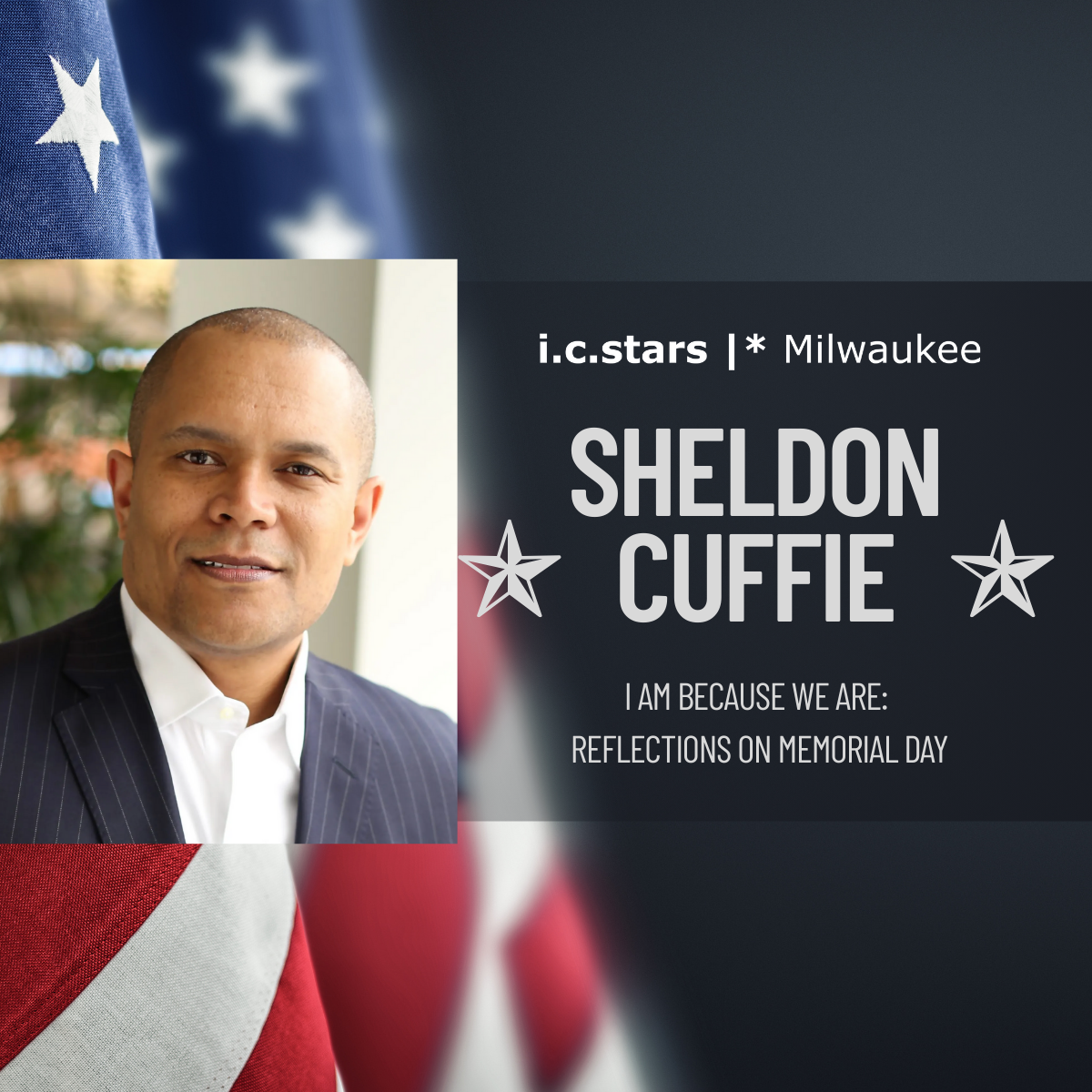
By: Sheldon Cuffie
A few days ago, I reflected on the meaning of Memorial Day. Today, I want to share a bit more about why carrying forward their legacy and applying it daily matters.
There has always been something about the military that’s drawn me in. At 13, I “decided” I wanted to join the Air Force. By 16, I had also “decided” I wanted to join the Army. With my father’s grudging approval, I enlisted in the Wisconsin Army National Guard on my 17th birthday. It was February 1991, right as Desert Storm was gaining momentum.
I didn’t have a clear plan for how to pay for college, and the Army was starting to modernize its tech. I saw an opportunity. I figured I’d get hands-on experience, qualify for the GI Bill, and then go to school. But what I found was something much deeper: a sense of purpose, discipline, and the importance of people.
One moment from that time still stands out. During the field training portion of basic at Fort Leonard Wood, I was a city kid learning how to operate in the woods. I was exhausted. A young captain walked by and asked where I was from and how I was doing. Our company officer actually wanted to know my story?
I remember thinking, wait, he’s tough and he cares? Can those two things go together?
It was a small moment, but it gave me both comfort and clarity. And I’d have similar experiences many times throughout my career.
The military taught me over and over again that nothing works without your people. People fall to the level of their training, and they rise to the level of support they feel. That moment also taught me that leadership isn’t just about giving orders. It’s about connection. And in that connection, in that care for one another, is where ubuntu lives. When we see each other as human first, we build stronger teams and stronger communities.
That’s the same reason I’ve stayed connected to i.c.stars. Like many of their participants, I didn’t take the traditional college path. I worked, studied, raised a family, and navigated my share of wins and setbacks. I didn’t finish my degree until my thirties. And I’m not the exception. Nearly 74 percent of undergraduates today are considered non-traditional students.
That’s why i.c.stars matters. They see potential in lived experience. They help turn that experience into capability, and that capability into leadership. I’m proud to serve on the i.c.stars Milwaukee Advisory Board and to support others as they write their own stories. If your path hasn’t been a straight line, you’re not behind. You’re building something real. And there are communities like i.c.stars ready to walk alongside you.
Inspired by this story? Learn how we support talent and leadership development rooted in discipline, growth, and resilience. Learn how to get involved with i.c.stars Milwaukee.